
When choosing between a worm gear and a helical gear, the job in question should determine the better choice. Worm gears are best suited for large reduction ratios, very compact designs, low-speed, high-torque applications, and applications that benefit from self-locking. In contrast, a helical gear is better for smooth, fast, efficient continuous transmission. The primary considerations when choosing between the two should be the required speed, torque, shaft arrangement, heat, noise, and duty. Simply choosing a gear by its name is not sufficient.
Worm Gear vs Helical Gear: The Core Design Difference
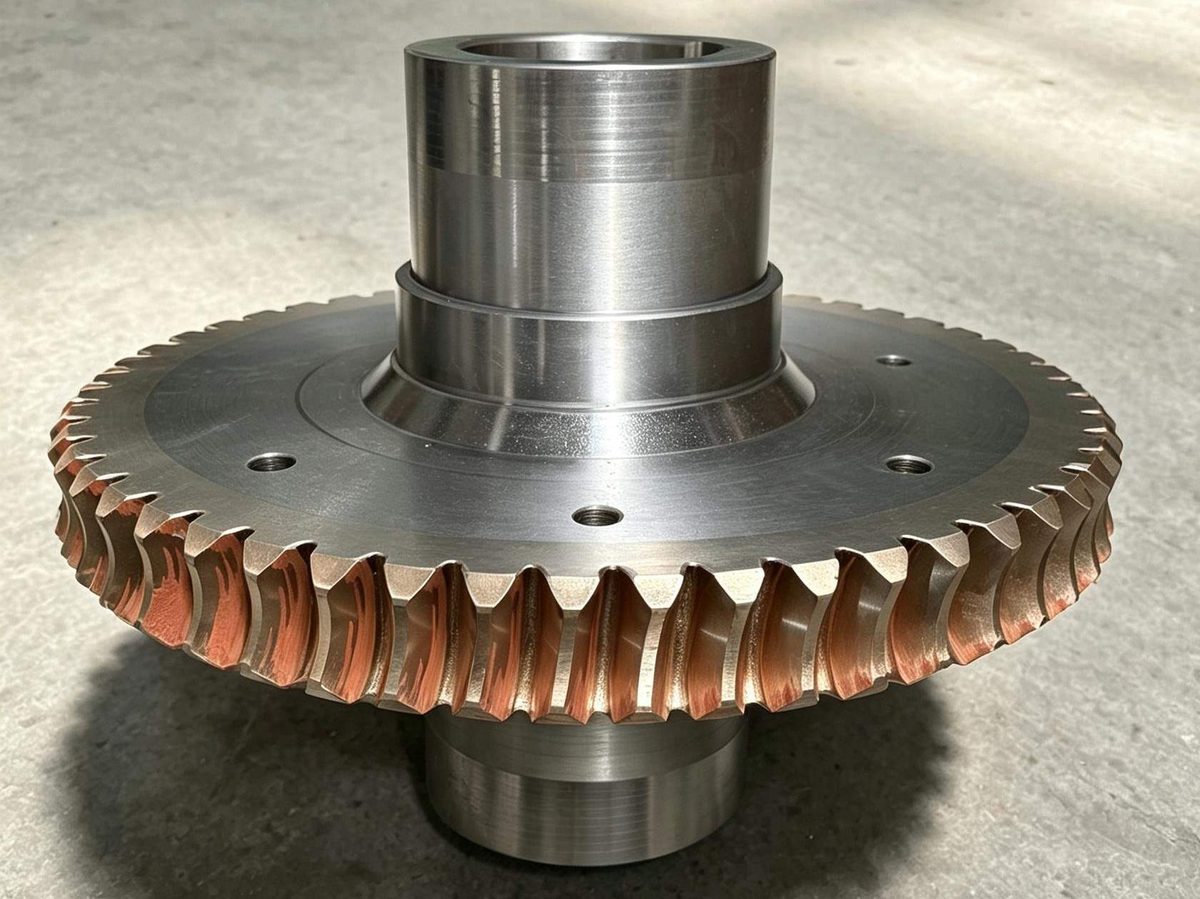
A worm gear set consists of a screw-like worm that drives a worm wheel on crossed shafts. This type of gear is usually set at right angles to each other. The sliding contact allows for a large gear ratio in a small space. Typical applications for worm gear sets are for lifting, for indexing, for adjustment drives, for small winches, and for applications where reverse running is to be limited.
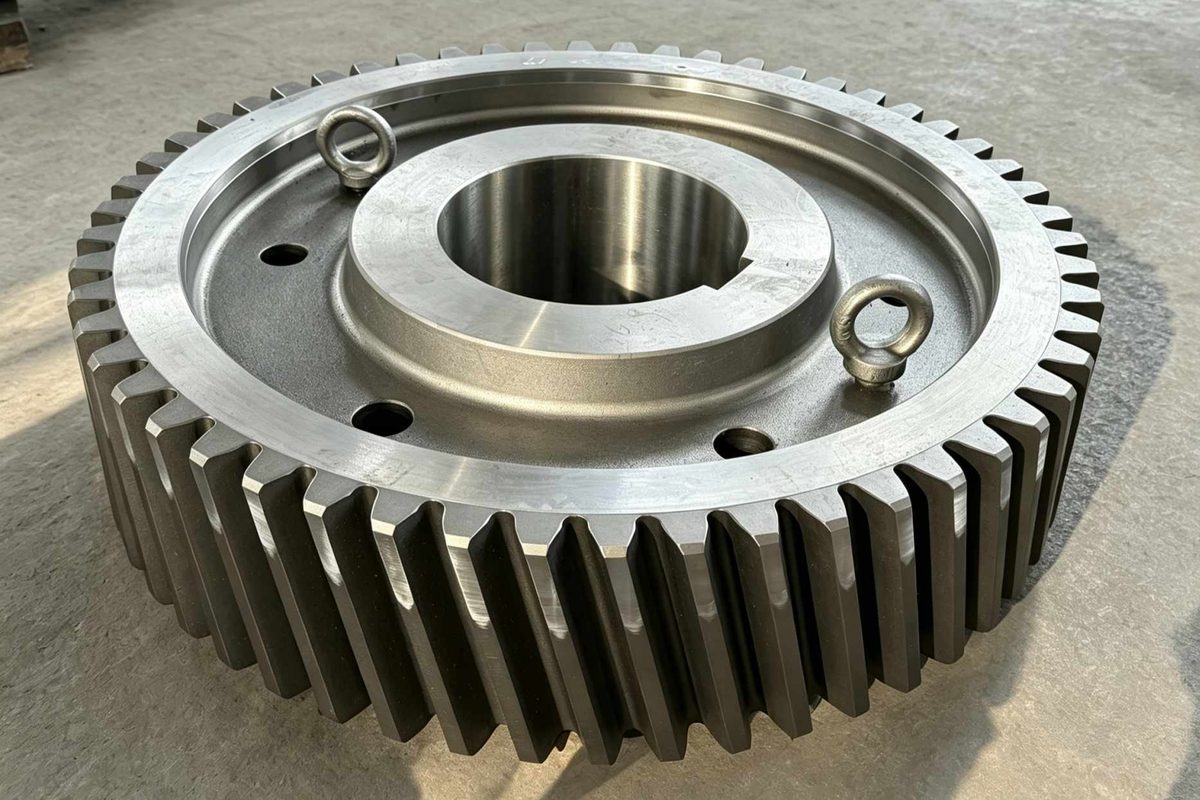
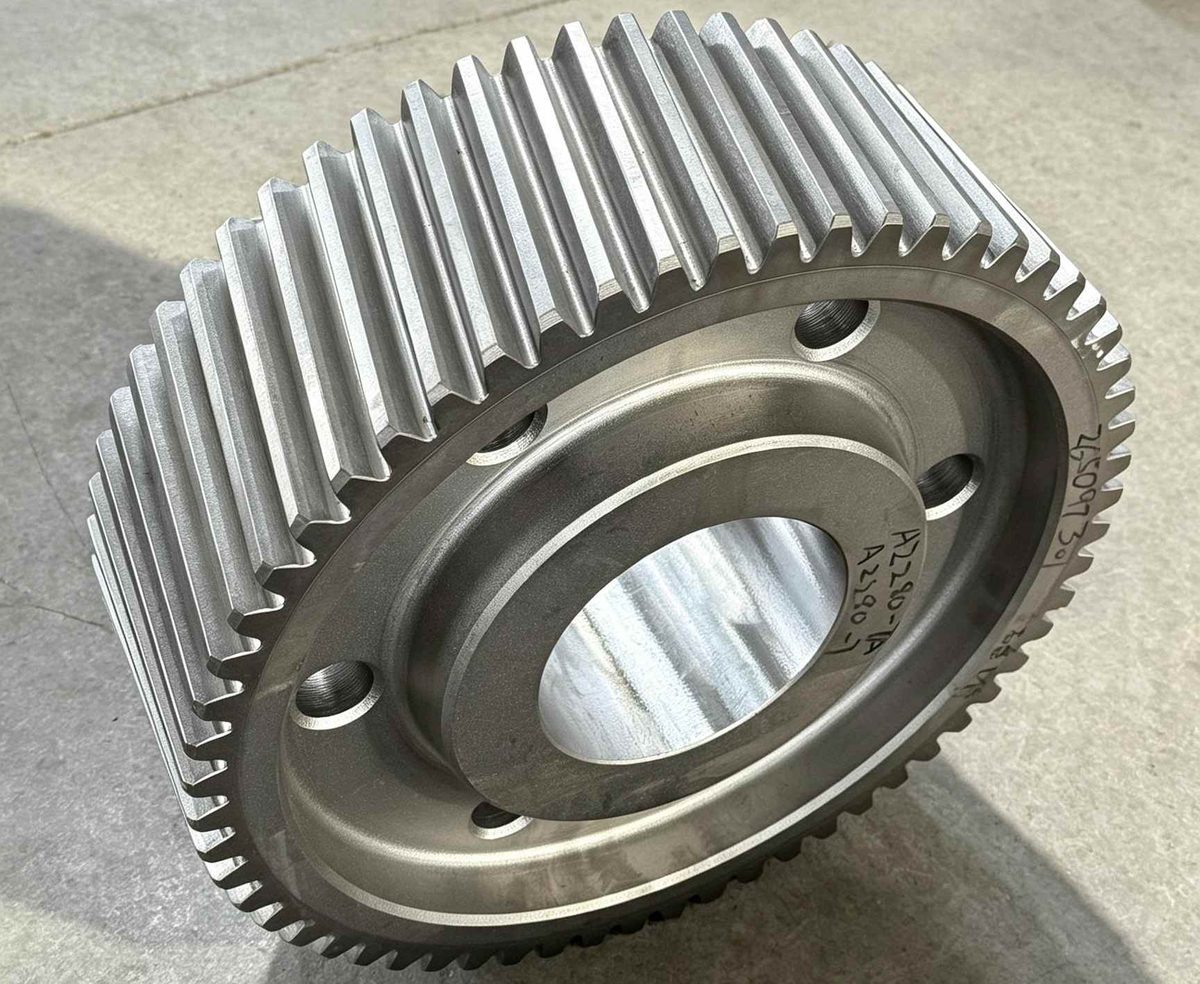
Helical gears are designed with teeth that are angled, which mate up in an incremental manner, as opposed to spur gears, which have teeth that mate up across the full width of the tooth. In mesh, more of the gear’s teeth are supporting the load, providing for smooth operation and less noise, especially when compared to similar spur gears. However, this type of gear produces axial thrust, which must be accommodated by the gear’s supporting shaft, bearings, and housing.
A closer inspection of configurable worm gear sets can be found on the YIZHI MACHINERY by selecting from working configurations as opposed to simply selecting from a list of interchangeably used reducers.
How Each Gear Behaves in Service
When a Worm Gear Set Makes Sense
Worm gearing offers a high ratio in a single stage, a compact housing, and positive, controlled output speed. In addition, the special geometry of worm gearing can be designed to provide a self-locking action, should this be required for lifting or positioning purposes. The self-locking action must, however, be designed into the worm gear as a specific condition and cannot be assumed to apply to all worm drives.
Sliding friction is a major problem for worm drives. The extra friction between the worm and wheel can generate heat and cause loss of power. Even a well-matched helical gear set can lose power and produce heat if there are problems with load, speed, lubrication, and alignment. So, it is best to choose materials, surface finish, lubrication, and thermal management early on.
When a Helical Gear Is the Better Fit
Helical gears are suited for long-term power transmission. This type of gear is especially suitable for applications where smooth engagement, high speed, and load sharing are important. These gears are widely used in machine tools, in compressors and blowers, in gear reducers, in pumps, and in power tools where vibration and noise can affect service quality. The efficiency and wear behavior of helical gears are very much dependent on the tooth accuracy, heat treatment, lubrication, and the correct assembly alignment.
In addition to axial force caused by the angled teeth of helical gears, helical gears are not simply replacement parts for spur gears. The thrust in the direction and magnitude of the force must be supported by the bearing, and the housing must be able to hold the gear in the correct position under load. When these details can be met, the progressive engagement of the teeth of the helical gear provides a stable transmission feeling.
Comparing Industrial Performance
Reduction Ratio, Speed, and Heat
It is not a matter of theoretical efficiency, but rather whether the drive delivers the required power without generating excessive heat or maintenance problems. Large ratio reductions in simplified machines can often be achieved with a worm gear set, while higher speed operation and smooth continuous power transfer are better served by a helical gear.
While a compact worm gearbox might even allow omitting one stage, sufficient space must be kept for lubrication as well as for heat dissipation. Although a helical design requires more space for bearings and the resulting larger reduction, it often is the more efficient option for continuous movement. Important are a fair weight ratio, duty cycle, installation space, and maintenance access.
Noise, Load, and Reliability
As long as the gears are manufactured accurately for quiet operation and properly aligned, both types of gears can operate quietly. Soft worm gears have a sliding contact that can feel softer than a helical gear. As the worm gear drive warms up, though, the lubricant can change and affect the sound. A helical gear operates by gradually increasing contact as the gear is loaded. Errors in tooth lead, excessive bearing play, and poor thrust control all create vibration and uneven contact.
In selecting a gear solution for mining & heavy industry applications, consideration should be given to the ability to withstand shock loading, wear, contamination, and ease of inspection. For example, in pump, metro, or power tool applications, the primary concern is stable operation under controlled motion, with repeatable manufacturing being a key criterion. The application will determine what compromise is acceptable.
Selecting a Custom Gear Solution
Start with the Working Conditions
Start by specifying the input and output speeds and torque range, as well as the number of operating hours, reversals, shock loads, ambient conditions, and available space. The relationship between the shafts must also be defined. Worm gear sets are designed for crossed shafts, whereas helical gears are typically used for parallel-shaft transmission. This data quickly allows you to rule out most gear forms so that only the few suitable designs remain.
Also consider the component in the context of a system. A custom gear can also be a part of a gear shaft, an internal gear, a bevel gear, a coupling, a bearing seat, a keyway in a machined part, etc. The good solution must also protect the complete transmission from wrong dimensions and from unplanned changes in the assembly.
Match Materials, Finishing, and Inspection
Material and heat treatment should be selected based on tooth load, wear risk, and application environment. Processes like hobbing, shaping, grinding, honing, milling, drilling, and heat treatment affect the final part geometry. Surface treatment could also be required to improve corrosion resistance or fatigue properties.
For accurate installation, Worm gear and Helical gear inspections should measure key dimensions, tooth profile and height, pitch, surface finish, hardness, and, most importantly, tooth contact. Deviations of this nature can translate into heat, noise, increased backlash, or excessive wear after installation. Custom gear projects are particularly sensitive to such minor deviations.
Where YIZHI MACHINERY Fits
YIZHI MACHINERY offers a practical gear solution, designed and produced as part of a real transmission, not just as a generic catalog product. Our products include worm gear sets and other gear types, such as helical gears and gear shafts, as well as internal gears and bevel gears. Related parts are also precision machined as required.
For custom helical gears, the really useful discussion is about dimensions, material, tolerance, heat treatment, surface finish, and your specific equipment.
This approach is relevant for agriculture, industrial machinery, mining, metro systems, pumps, and power tools. The products have to be adapted to the respective requirements. This means gear geometry has to be connected with speed, load, space, and operating safety requirements of the equipment.
Conclusion
While there’s no real winner between worm gears and helical gears, the worm gear set offers high reduction ratios in compact crossed-shaft configurations, low-speed torque, and self-locking applications where appropriate. For smoother and faster continuous transmission, the helical gear is often the better choice. The key to getting the best result is to match the chosen gear to appropriate materials, surface finishes, bearings, lubrication, and inspection, based on how the machine will actually be used.
We can discuss a custom transmission to meet your specific operation. Please contact YIZHI MACHINERY and connect the dots between your application and our custom gear solution.
FAQ
Q: What is the main difference between a worm gear and a helical gear?
A: Worm gear sets are typically used to provide sliding contact in a compact, high-ratio application, often at right angles. In contrast, Helical gears are typically used to provide smooth, continuous power transmission. Helical gears tend to be used to provide high speed, efficiency, and load sharing as opposed to ratio and layout.
Q: Is a worm gear better for high reduction ratios?
A: Yes. Worm gearing is often used for very compact single-stage designs that require low output speeds. Worm gearing can provide a large ratio, possibly even self-locking under the right conditions. However, the sliding surfaces create large amounts of friction, which leads to heat and decreased efficiency. Proper lubrication, alignment, and control of thermal growth are required.
Q: When should industrial equipment use helical gears?
A: Helical gears are used for smooth engagement, constant power, and medium to high operating speeds. They are used in reducers, compressors, pumps, machine tools, and power tools. Properly designed bearings and housing for axial thrust of helical teeth are required.
Q: Can YIZHI MACHINERY customize worm and helical gears?
A: YIZHI MACHINERY can make custom gears and supply them according to customers’ requirements for products, dimensions, material, precision, and processing, etc. The above information is general, and the details shall be determined according to the specific requirements of the application equipment, shaft arrangement, load, speed, and working conditions, etc., and then go through design, machining, checking, and packing.
